Running a growing e-commerce business feels exciting – until you realise you’re spending more time managing tools than actually running your business.
You’ve got one platform for your online store, another for inventory, a separate app for delivery tracking, and yet another tool pinging customers with order updates. And somehow, none of them talk to each other properly. Sound familiar?
This is the reality for thousands of growing businesses today. And the bigger you get, the messier it becomes.
Here’s the thing – integration is no longer a “nice to have.” It’s the backbone of any e-commerce operation that wants to grow without falling apart. Because when your storefront, inventory, delivery, and customer communication all work as one connected system, everything changes.
Less chaos. Faster fulfillment. Happier customers.
Let’s break down what that actually looks like.
What Is an Integrated E-Commerce System?
Simply put, an integrated e-commerce system is a single unified platform that connects every part of your business – your online store, your operations, your logistics, and your customer communication – into one seamless flow.
Think of it as the difference between a relay race where the baton keeps getting dropped, and a single runner who goes the whole distance without stopping.
When you use separate standalone tools, data gets stuck. Your inventory tool doesn’t know what your store just sold. Your delivery app doesn’t know what your warehouse just packed. Your finance software doesn’t know what your sales team just invoiced. Every gap between tools is a gap where things go wrong.
An integrated system closes all of those gaps.
QWY’s e-commerce solution is built exactly around this idea – bringing together every touchpoint of your e-commerce operation into one platform, so you’re always working with accurate, real-time information across the board.
Key Pain Points It Solves for Growing Businesses
Before we get into features, let’s talk about the problems – because if you’ve been running an e-commerce business for any length of time, at least one of these will hit close to home.
- Order tracking chaos and delayed fulfillment. A customer places an order. It gets processed in one system, packed in another, and dispatched through a third. By the time something goes wrong, no one knows where the breakdown happened. And the customer? They’re just waiting – and getting frustrated.
- Manual inventory updates causing stockouts or overselling. You sell out of a product online, but the system hasn’t updated yet. So another customer orders it, you have to cancel, and you’ve just lost not just a sale but potentially a loyal customer. Manual updates simply can’t keep up with real order volumes.
- Poor customer communication post-purchase. The sale is done, but the customer is left in the dark. No order confirmation, no dispatch update, no delivery notification. In today’s market, silence after a purchase is a trust-killer.
- Disconnected finance and invoicing from sales data. Your sales team is closing orders, but your finance team is chasing paperwork to raise invoices. Nothing is automatic. Month-end becomes a painful reconciliation exercise that eats up hours nobody has.
These aren’t small inconveniences. At scale, they’re the difference between a business that grows and one that stalls.
Core Features That Power the System
Here’s what an integrated e-commerce system actually gives you – and why each feature matters more than it might first appear.
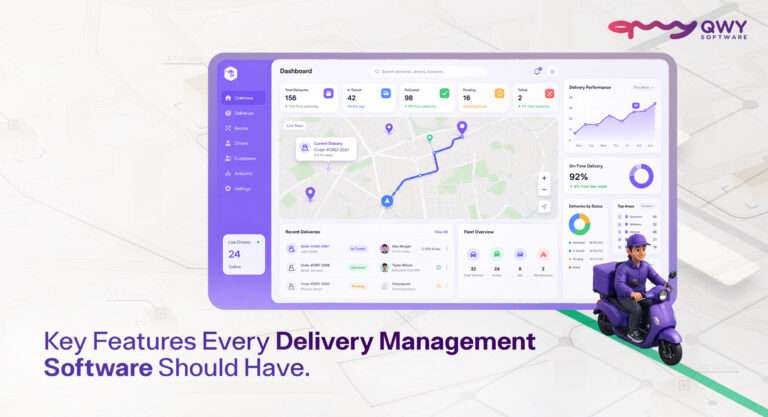
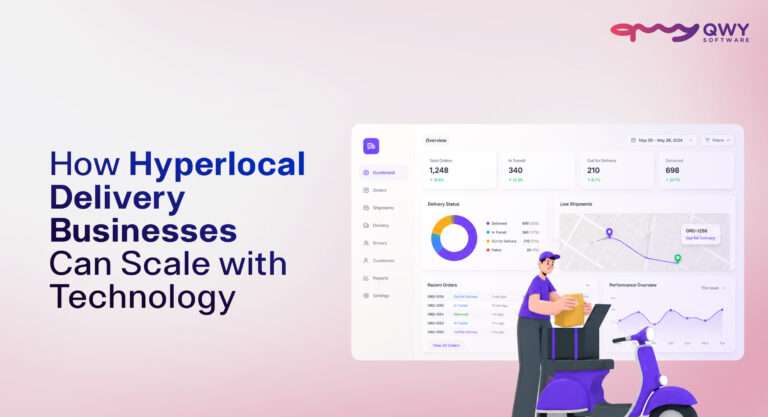
- Order Dashboard. Imagine opening one screen in the morning and seeing exactly where every order stands – placed, packed, dispatched, delivered. Real-time order monitoring with trends and analytics means you’re never guessing. You’re deciding based on what’s actually happening right now.
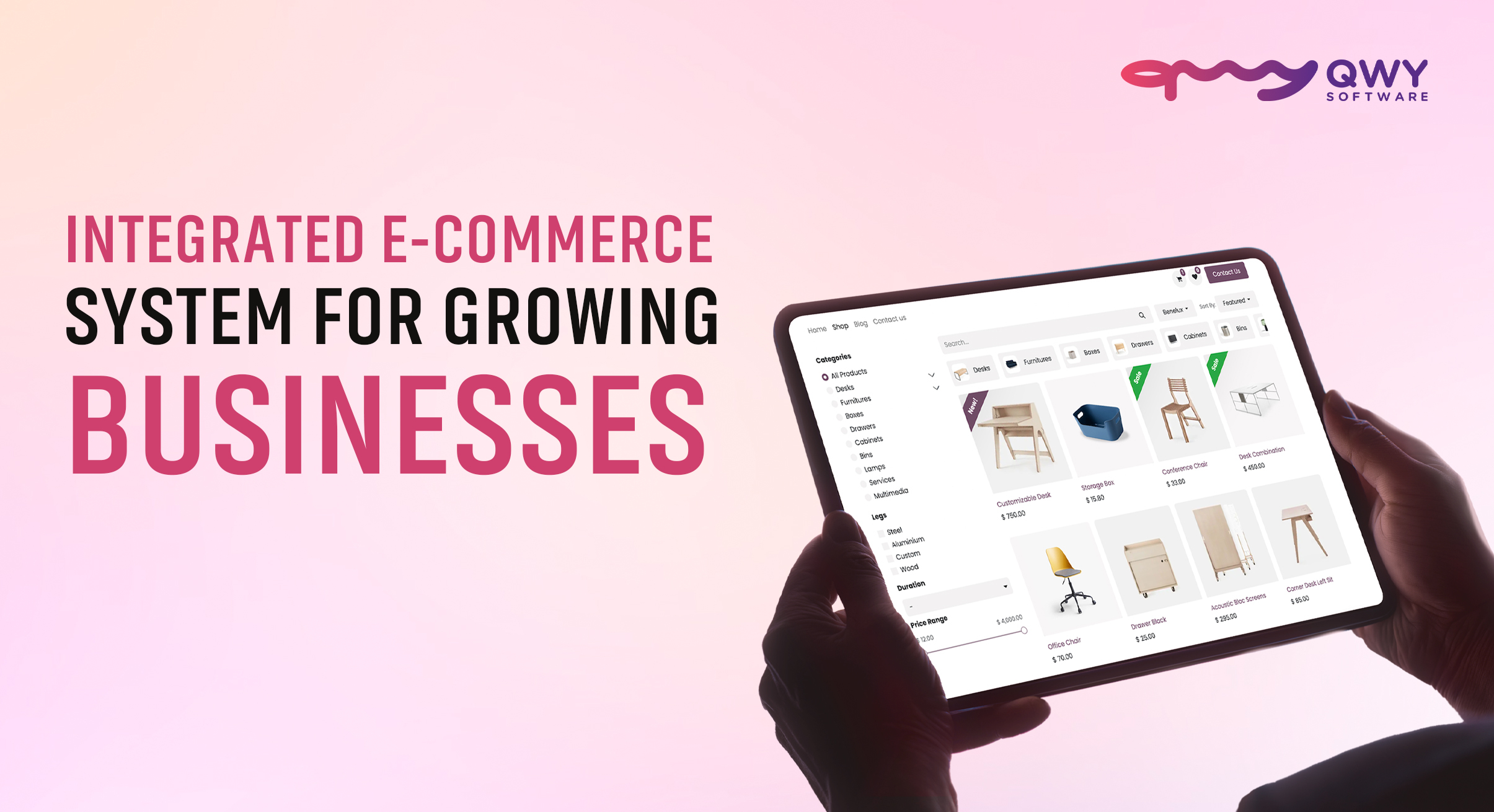
- Catalogue Management. Adding products, updating prices, managing variants – it should be straightforward, not a half-day job. A good catalogue management system lets you make changes quickly and have them reflect instantly across your storefront.
- Live Order Tracking. This one is huge – for you and your customers. Real-time delivery status with live driver location means your team knows where every delivery is, and your customers aren’t left refreshing their inbox hoping for an update.
- Promocode & Promotions. Want to run a flash sale? Launch a festive offer? A built-in promotions tool means you don’t need a separate marketing platform to create and manage discount codes. Everything lives in the same place, and conversions go up because the experience is seamless.
- Storefront Branding. Your brand isn’t just a logo – it’s the entire experience. Being able to customize your platform with your own colours, logo, and theme means customers get a consistent brand experience from the moment they land on your store to the moment their order arrives.
- Address Book. For businesses with repeat customers or regular delivery routes, saved pickup and delivery addresses save time on every single order. Small features, big impact on daily operations.
Seamless Integrations That Tie Everything Together
Features are great. But what makes an integrated e-commerce system truly powerful is how everything connects – both within the platform and with the tools around it.
- ERP Integration (Odoo). This is the engine room. When your e-commerce platform syncs with Odoo, your inventory, finance, and accounting are all pulling from the same data. No duplicates, no discrepancies, no manual transfers. One source of truth for your entire operation.
- Payment Gateways. From prepaid wallet recharges to order payments and automated invoicing, secure payment integration means transactions are processed smoothly and recorded accurately – without anyone having to manually log anything.
- SMS & Email Gateways. Every touchpoint in the customer journey – order confirmed, order dispatched, order delivered – can be automated. Customers stay informed, your support team gets fewer “where’s my order?” calls, and trust builds naturally.
- CRM Platforms. When your customer data is centralised, your team can actually use it. Purchase history, preferences, previous issues – all in one place, so every interaction feels informed rather than generic.
- Maps & Navigation APIs. Route optimisation and real-time ETAs aren’t just delivery conveniences – they directly impact your fulfillment speed and your cost per delivery. Smarter routes mean faster deliveries and lower operational costs.
- Mobile Apps. Your customers want live updates on their phones – not emails they’ll read three hours later. Mobile app integration means they get real-time delivery tracking right in their hands, which dramatically improves the post-purchase experience.
Industries That Benefit the Most
An integrated e-commerce system isn’t built for one type of business. It adapts across industries – and here’s how.
1.Online Retailers get seamless inventory sync, automated dispatch, and end-to-end customer experience management that scales as order volumes grow.
2.Food & Beverage businesses need speed above everything else. Route optimisation and real-time tracking ensure meals arrive fresh and on time – every time.
3.Fashion & Apparel brands benefit from personalised shopping experiences, real-time inventory updates across sizes and variants, and seamless order fulfillment that keeps customers coming back.
4.Medicine and Healthcare providers deal with sensitive, time-critical deliveries. Secure, compliant delivery management with full traceability isn’t optional in this space – it’s essential.
5.Small and Medium-Sized Businesses are perhaps the biggest winners. An integrated system gives SMBs the operational infrastructure of a much larger enterprise – without the enterprise price tag or complexity. It lets them expand their market reach, automate sales and inventory, and deliver consistently – all from one platform.
How Integration Drives Business Growth
At this point, you might be thinking – okay, this sounds good, but does it actually move the needle for growth? The answer is yes, and here’s why.
- Faster fulfillment equals better customer retention. In e-commerce, speed is trust. When customers receive their orders quickly and accurately, they come back. When they don’t, they leave – and they tell others.
- Automation reduces manual errors and operating costs. Every manual step in your process is a potential error and a labour cost. Automation doesn’t just save time – it protects your margins and your reputation simultaneously.
- Data visibility enables smarter business decisions. When you can see what’s selling, what’s sitting in your warehouse, what your delivery costs are, and how your customers are behaving – all in real time – your decisions stop being guesses and start being strategy.
- Scalability without chaos. This might be the most important one. A disconnected system that works at 100 orders a month will break at 1,000. An integrated system is built to grow with you – so your operations stay clean and efficient no matter how fast your order volume climbs.
Why QWY’s E-Commerce System Stands Out
There’s no shortage of e-commerce platforms out there. So why QWY?
Because QWY’s e-commerce system is built specifically for growing businesses – not for enterprises with massive IT teams and six-month implementation timelines. It’s designed to be practical, powerful, and ready to deploy without disrupting your entire operation.
The Odoo-powered backbone gives you deep customisation capability – so the platform moulds to your business, not the other way around. And the end-to-end coverage – from storefront to doorstep – means you’re not stitching together three different tools to get one complete workflow.
It’s also been built with diverse industries in mind – retail, food, fashion, healthcare, SMBs – which means the platform understands the nuances of your business rather than forcing you into a one-size-fits-all setup.
Conclusion
Here’s the bottom line: integration isn’t just an operational upgrade. It’s the foundation that makes sustainable e-commerce growth possible.
If you’re still juggling disconnected tools, manually updating inventory, and chasing order statuses across multiple platforms – you’re working harder than you need to, and your customers are feeling the gaps too.
Take a moment to honestly evaluate your current setup. Are your systems working together, or are they working against you?
Because the businesses that will win in e-commerce over the next few years won’t necessarily be the ones with the best products. They’ll be the ones with the most connected, efficient, and scalable operations behind those products.
Ready to power up your e-commerce operations? Get in touch with QWY today and see how one integrated platform can transform the way you sell, deliver, and grow.