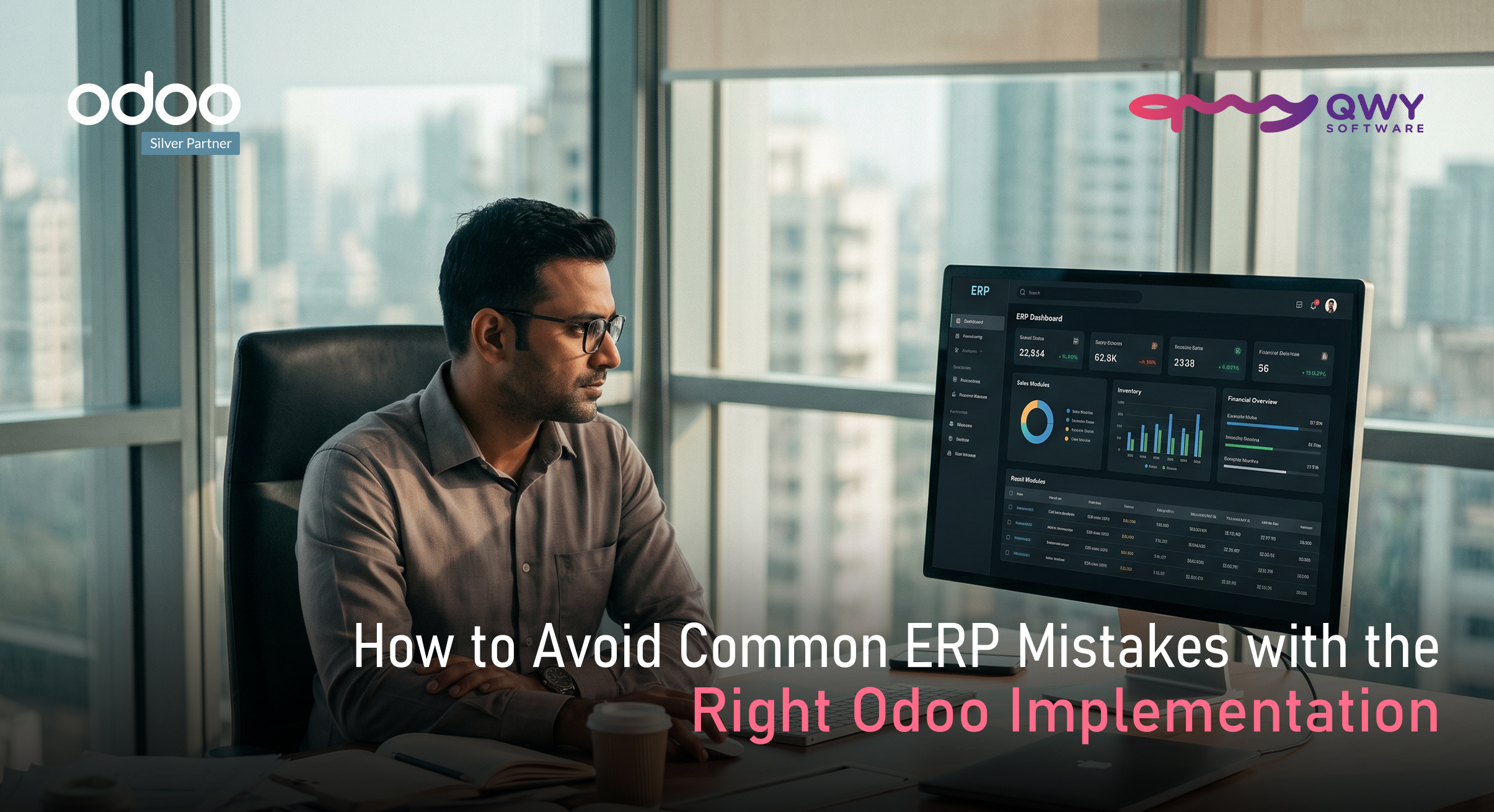
Businesses invest in ERP systems to improve efficiency, increase visibility, and support long-term growth. A well-implemented ERP connects core business functions such as sales, inventory, finance, purchasing, HR, and customer management into one unified platform. This creates better control, faster decision-making, and smoother day-to-day operations.
However, many ERP projects fail to deliver the expected value. Delays, budget overruns, employee resistance, poor data quality, and operational disruption are more common than many businesses expect. In most cases, these problems are not caused by the software itself. They are caused by avoidable implementation mistakes.
That is why choosing the right implementation strategy is critical. With a structured Odoo implementation, businesses can reduce risk, improve adoption, and achieve faster returns on investment.
Odoo is a flexible and scalable ERP platform designed to adapt to different business models. When implemented strategically, it becomes more than an ERP system, it becomes a foundation for growth, automation, and better performance.
In this blog, we explore common ERP mistakes businesses make and how the right Odoo implementation helps avoid them.
Why ERP Implementations Fail More Often Than Expected
ERP implementation is not just a software deployment. It is a business transformation project that affects people, workflows, reporting, and operational processes across departments.
When businesses focus only on software selection and ignore planning or change management, projects often struggle.
Some of the most common reasons ERP implementations fail include:
Lack of Clear Business Goals
Many companies begin ERP projects without clearly defining what they want to achieve. Without measurable goals, it becomes difficult to make smart implementation decisions.
Poor Planning and Unrealistic Timelines
Trying to implement too much too quickly often leads to confusion, delays, and missed priorities.
Choosing Software Without Understanding Workflows
Some businesses choose systems based on features alone without evaluating whether the software aligns with their real operational needs.
Resistance from Employees
If employees are not involved, trained, or supported, adoption becomes slow and teams may continue using old methods.
Limited Post-Launch Support
Many businesses assume the project ends at go-live. In reality, ERP success depends on continuous improvement after launch.
Common ERP Mistakes Businesses Make
a. Starting Without Defined Objectives
One of the biggest mistakes is implementing ERP simply because competitors are doing it or because the company wants to modernize systems.
Without defined goals, ERP projects lose direction.
Examples of clear ERP objectives include:
- Reduce manual work
- Improve inventory accuracy
- Speed up invoicing
- Gain real-time reporting
- Improve customer service
- Automate approvals
A successful Odoo implementation starts with clear KPIs and expected outcomes.
b. Ignoring Existing Business Processes
Many companies migrate their current workflows into a new ERP system without evaluating whether those processes are efficient.
This means broken workflows, duplicate approvals, manual bottlenecks, and outdated practices get carried into the new system.
Before implementation, businesses should review:
- Order management workflows
- Procurement approvals
- Warehouse operations
- Financial processes
- Reporting methods
Odoo delivers better results when workflows are optimized before setup begins.
c. Choosing a One-Size-Fits-All Setup
Every business operates differently. Standard ERP setups often fail to reflect industry-specific needs, internal processes, or growth plans.
This creates frustration, workarounds, and lower productivity.
Odoo stands out because of its modular flexibility. Businesses can choose only the applications they need and scale gradually.
For example, a company may begin with:
- CRM
- Sales
- Inventory
- Accounting
Then later add:
- HR
- Manufacturing
- Helpdesk
- Projects
- E-commerce
This makes Odoo a practical solution for growing businesses.
d. Poor Data Migration Planning
ERP systems depend on clean and accurate data. If legacy data is outdated, duplicated, or incomplete, serious issues can occur after launch.
Common migration problems include:
- Duplicate customer records
- Wrong product details
- Incorrect stock balances
- Missing invoices
- Supplier inconsistencies
Poor data migration can damage trust in the new system from day one.
A proper Odoo implementation includes:
- Data audit
- Data cleanup
- Mapping fields correctly
- Test migration
- Validation checks
This ensures the new ERP starts with reliable information.
e. Underestimating User Training
Even the best ERP system can fail if employees do not know how to use it properly.
Many businesses spend heavily on implementation but rush training. As a result, teams become frustrated and adoption slows.
Effective training should include:
- Role-based training sessions
- Hands-on practical learning
- Department-specific workflows
- Documentation and guides
- Post-launch support
Odoo’s user-friendly interface makes adoption easier, but training is still essential for long-term success.
f. No Long-Term Support Plan
ERP implementation does not end after go-live.
Businesses often need adjustments, reports, new automations, integrations, and system enhancements after real users begin working inside the platform.
Without support, small issues become larger operational bottlenecks.
A long-term support plan should include:
- Bug fixes
- Performance
- improvements
- User assistance
- Process enhancements
- Security updates
- Version upgrades
Continuous support helps maximize ERP ROI.
How the Right Odoo Implementation Prevents These Mistakes
a. Requirement Discovery Before Deployment
Successful projects begin with understanding how the business works.
This includes:
- Current workflows
- Operational pain points
- Reporting requirements
- Department needs
- Growth plans
Proper discovery helps configure Odoo correctly from the beginning.
b. Modular and Scalable Rollout
Instead of implementing everything at once, businesses can launch core modules first.
Typical starting modules include:
- Sales
- Inventory
- Accounting
- CRM
- HR
Additional modules can be introduced later as teams become comfortable and requirements grow.
This phased approach reduces disruption and improves adoption.
c. Smart Customization Where Needed
Odoo offers excellent standard functionality, but some businesses need tailored workflows.
Examples include:
- Custom approval flows
- Role-based dashboards
- Automated notifications
- Industry-specific reports
- Integration with existing tools
The right implementation partner customizes only where needed and avoids unnecessary complexity.
d. Clean and Structured Data Migration
A professional migration process includes:
- Reviewing source data
- Removing duplicates
- Correcting errors
- Mapping fields accurately
- Running test imports
- Final validation before go-live
This reduces risk and improves confidence in the new ERP system.
e. User Training and Change Management
Successful ERP adoption depends on people.
A strong rollout includes:
- Role-based training
- Internal champions from each department
- Clear communication
- Ongoing support
- Feedback collection after launch
When users feel supported, adoption improves dramatically.
f. Ongoing Support and Optimization
After go-live, businesses gain real insights into how teams use the system.
This is the ideal time to improve:
- Reports
- Dashboards
- Automations
- Performance
- Additional modules
- Process efficiency
ERP should evolve with the business.
Why Odoo is a Strong ERP Choice for Growing Businesses
Businesses choose Odoo because it offers the right balance of flexibility, functionality, and long-term value. Unlike many traditional ERP systems that can be expensive and rigid, Odoo provides a modern platform that can adapt as business needs evolve.
Open-Source Flexibility
Odoo can be configured and customized to match real business needs.
Cost-Effective Ownership
Compared to many traditional ERP systems, Odoo offers strong value with lower overall ownership costs.
Wide Range of Integrated Modules
From CRM to inventory, accounting, HR, e-commerce, manufacturing, and project management, Odoo connects operations in one system.
Suitable for SMEs and Enterprises
Whether you are a growing startup or an established enterprise, Odoo scales with you.
Easy Third-Party Integration
Odoo can integrate with payment gateways, e-commerce platforms, logistics tools, communication systems, and more.
For businesses looking for a future-ready ERP platform, Odoo is a practical and scalable choice.
Signs You Need an Expert Odoo Implementation Partner
While Odoo is flexible and user-friendly, successful ERP implementation still requires the right strategy, technical expertise, and business process understanding. Many businesses benefit significantly from working with an experienced implementation partner.
You may need expert support if your business has:
- Complex workflows across multiple departments
- Need for custom automation or approvals
- Multi-location warehouses or branches
- Multi-company operations
- Legacy software requiring secure migration
- Limited in-house ERP expertise
- Need for integrations with existing systems
- Advanced dashboards or reporting requirements
An expert implementation partner helps reduce delays, avoid costly mistakes, and ensure the system is aligned with your actual business goals.
They also bring value through:
- Faster project execution
- Better process mapping
- Cleaner data migration
Smart customization decisions
User training and adoption support
Ongoing optimization after launch
Choosing the right partner can be the difference between simply installing software and achieving real business transformation.
Quick ERP Success Checklist
Before starting your ERP journey, review the essentials that often determine project success.
Strategic Readiness
- Clear business goals defined
- Leadership support secured
- Internal project owners assigned
- Realistic timeline created
Operational Readiness
- Existing workflows reviewed
- Right modules selected
- Pain points documented
- Growth requirements considered
Technical Readiness
- Clean and accurate data prepared
- Legacy systems assessed
- Integration needs identified
- Security and access roles planned
People Readiness
- Employees informed early
- Training plan prepared
- Department champions selected
- Support process defined
When these areas are addressed before implementation begins, businesses reduce risk and improve the chances of a smooth rollout with faster ROI.
Conclusion
ERP mistakes are common, but they are rarely unavoidable.
Most implementation failures happen because businesses rush decisions, underestimate planning, ignore user adoption, or treat ERP as only a software purchase rather than a business transformation initiative.
With the right Odoo implementation, businesses can avoid these risks and create a system that improves efficiency, visibility, collaboration, and long-term scalability.
Odoo is more than an ERP platform when deployed strategically. It becomes the digital backbone of your operations, helping teams work smarter, automate routine tasks, and make better decisions with real-time data.
If your business is planning an ERP upgrade, migration, or new implementation, now is the right time to build it the right way.
Partner with QWY to implement Odoo with confidence, through expert planning, tailored customization, seamless integration, and long-term support designed for sustainable growth.