Table of Contents
Managing multiple vehicles, drivers, delivery schedules and customer expectations can be challenging for logistics companies. Without accurate location information, fleet managers may struggle with unexpected delays, inefficient vehicle allocation, unnecessary stops and communication gaps between drivers and operations teams. Relying entirely on phone calls and manual updates can make these challenges harder to manage as a business grows.
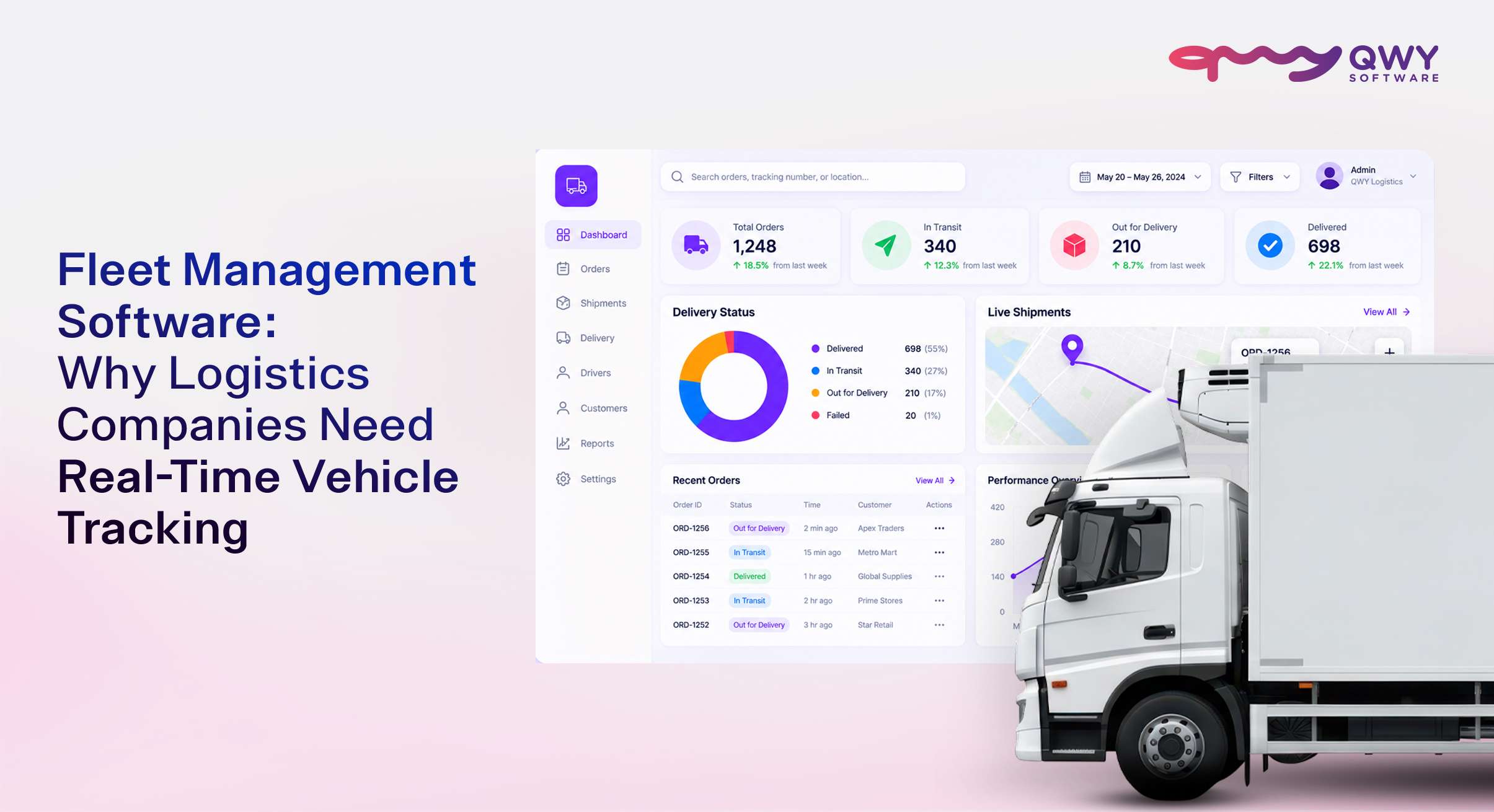
Fleet Management Software helps businesses gain better visibility into their vehicles, monitor journeys and make informed operational decisions. With Real-Time Vehicle Tracking, logistics companies can access current vehicle locations, respond to delays faster and improve coordination across their delivery operations.
As logistics networks become more complex, having access to reliable vehicle information is increasingly important. But how does real-time tracking work and what should businesses consider before investing in a fleet tracking solution?
What Is Fleet Management Software?
Fleet Management Software is a digital solution that helps businesses monitor vehicles and manage fleet-related activities through a centralized platform. Depending on its capabilities, it can provide vehicle location information, journey history, driver performance data, maintenance reminders, alerts, and operational reports.
For logistics companies, this technology creates a clearer picture of fleet operations. Instead of collecting updates individually from drivers, managers can access relevant information through a dashboard and use it to coordinate deliveries, allocate vehicles and review performance.
How Does Fleet Management Software Work?
Fleet Management Software typically combines GPS devices, vehicle telematics, connectivity and a digital platform to collect and display vehicle information.
The process generally involves four steps:
- Data collection: GPS-enabled devices determine vehicle locations, while supported telematics systems collect additional vehicle-related information.
- Data transmission: Available information is transmitted to the software platform through a network connection.
- Dashboard monitoring: Fleet managers view vehicle positions, journey details and relevant alerts through a dashboard or application.
- Reporting and analysis: Historical records and reports help businesses identify recurring delays, route inefficiencies and vehicle utilization patterns.
The information available depends on the tracking hardware, software features and integrations used by the business.
What Is Real-Time Vehicle Tracking?
Real-Time Vehicle Tracking uses GPS-enabled devices and connected software to display vehicle locations as updated information becomes available. It allows fleet managers to monitor vehicle movement during a journey rather than relying solely on records collected after delivery.
For example, if a delivery vehicle stops unexpectedly, a manager may be able to identify the stoppage and contact the driver to understand the situation.
However, tracking is not always instantaneous. Location accuracy and update frequency depend on the hardware, network connectivity, GPS conditions and software configuration.
Why Do Logistics Companies Need Real-Time Vehicle Tracking?
Real-Time Vehicle Tracking can improve operational visibility and help logistics businesses make better decisions throughout the delivery process. Its value extends beyond knowing where a vehicle is located.
1. Improve Fleet Visibility
Managing several vehicles across different routes becomes difficult when location updates depend on individual phone calls. A centralized dashboard gives managers a consolidated view of available vehicle locations and movement.
With Fleet Management Software, operations teams can identify which vehicles are moving, which have stopped and which may be available for new assignments, depending on the system’s features.
This visibility supports better coordination between dispatchers, drivers and delivery teams. It also reduces dependence on manual updates when making routine operational decisions.
2. Respond to Delays Faster
Traffic congestion, road closures, vehicle breakdowns and unexpected stoppages can affect delivery schedules. Without timely information, managers may learn about these issues only after a customer reports a delay.
Real-Time Vehicle Tracking helps teams identify potential disruptions sooner. Managers can contact drivers, investigate the cause and communicate revised arrival estimates where sufficient information is available.
For businesses handling multiple deliveries daily, faster responses can help minimize operational disruption and improve communication with customers.
3. Make Better Vehicle Allocation Decisions
Vehicle allocation requires more than knowing which vehicles are available. Managers also need to consider their locations, current assignments, delivery requirements and operational suitability.
Fleet Management Software can provide location and availability information that helps dispatchers assign suitable vehicles to new jobs. For example, a vehicle already near a pickup location may be a more practical choice than sending another vehicle from a distant location.
Better-informed allocation decisions can reduce unnecessary travel and improve fleet utilization, although the actual results depend on dispatch processes and business requirements.
4. Identify Inefficient Routes and Unnecessary Stops
Repeated route deviations, unnecessary stops and inefficient journeys can affect delivery schedules and operating expenses.
With Real-Time Vehicle Tracking and historical journey records, managers can investigate route deviations, review stoppages and identify recurring patterns. Route reports can help determine whether delays are associated with traffic, route planning, or other operational factors.
These insights allow businesses to review their delivery processes and make adjustments based on evidence rather than assumptions.
5. Improve Driver Safety and Accountability
Driver safety is an important consideration for businesses operating commercial vehicles. Depending on the available hardware and software capabilities, fleet tracking systems may support speeding alerts, driving behaviour reports and geofencing.
Geofencing creates a virtual boundary around a defined location, such as a warehouse, distribution centre, or customer site. The system can generate alerts when a vehicle enters or leaves that area.
These features can help managers identify potential risks, investigate unusual activit and encourage safer driving practices. Clear employee-monitoring policies and appropriate access controls should accompany their use.
6. Reduce Unnecessary Operational Costs
Fuel consumption, excessive idling, inefficient journeys and underutilized vehicles can increase fleet operating costs.
Fleet Management Software helps businesses investigate these factors through available location records, vehicle data and operational reports. For instance, managers may discover recurring unnecessary stops or vehicles spending excessive time idle.
However, tracking alone does not guarantee lower expenses. Businesses must analyse the findings, address the underlying causes and measure whether corrective actions improve performance.
7. Improve Customer Communication
Customers increasingly expect reliable delivery updates and clear information when schedules change. Limited fleet visibility can make it difficult for customer service teams to provide accurate responses.
Real-Time Vehicle Tracking can help businesses share more informed status updates and estimated arrival times, where supported by the platform and available data.
Better coordination between dispatch and customer service teams can reduce uncertainty, improve communication and support a more consistent delivery experience.
Key Features to Look for in Fleet Management Software
Businesses evaluating Fleet Management Software should select features according to their operational requirements rather than choosing a solution based only on the number of features available.
Feature | Why it matters |
Real-time GPS tracking | Provides visibility into vehicle locations |
Route history and deviation alerts | Helps identify route changes and recurring issues |
Geofencing | Generates alerts when vehicles enter or leave defined areas |
Driver behaviour monitoring | Helps identify unsafe driving patterns when supported by vehicle data |
Vehicle maintenance reminders | Helps businesses plan servicing and reduce avoidable downtime |
Fleet reports and dashboards | Supports performance analysis and informed decisions |
Alerts and notifications | Helps teams respond to selected events promptly |
System integrations | Connects fleet data with relevant business applications |
The right combination depends on fleet size, delivery complexity, reporting needs and the systems already used by the business.
Real-Time Vehicle Tracking vs. Traditional Fleet Management
Traditional fleet management often relies on phone calls, spreadsheets, manual records and updates collected from drivers. Real-time tracking introduces digital visibility and makes relevant journey information easier to access.
Traditional approach | Real-time tracking approach |
Relies heavily on calls and manual updates | Provides digital location visibility |
Journey information may be recorded after completion | Current movement and available journey history can be viewed |
Delays may be reported late | Alerts can help teams identify selected delays sooner |
Vehicle allocation relies on limited information | Decisions can use location and availability data |
Performance analysis involves manual record checking | Reports can help reveal recurring patterns |
Real-time tracking does not replace operational experience or effective management processes. Instead, it gives teams better information to support their decisions.
How to Choose the Right Fleet Management Software for Your Business
Selecting the right Fleet Management Software requires evaluating both immediate requirements and long-term operational needs.
- Assess Your Fleet Size and Requirements
Consider the number of vehicles, users, locations and deliveries your business manages. Determine whether you need basic location monitoring or additional capabilities such as maintenance management, driver behaviour reports and automated alerts. - Check Tracking Accuracy and Reliability
Review the location update frequency, historical data availability and system performance under different connectivity conditions. Ask how the solution handles network interruptions and whether tracking resumes when connectivity returns. - Consider Integration With Existing Systems
Check whether the platform can connect with your ERP, accounting software, CRM, or other business applications. APIs and supported integrations can help reduce manual data entry and improve coordination between departments. - Evaluate Usability, Security and Scalability
Choose a system that managers and operational staff can use efficiently. Review access controls, data protection practices and the platform’s ability to accommodate additional vehicles and users as the business grows. - Understand the Total Cost
Consider software subscriptions, GPS hardware, installation, integrations, employee training, maintenance and ongoing support. Comparing the total cost against the operational problems the system is expected to address can support a more informed investment decision.
Common Challenges When Implementing Real-Time Vehicle Tracking
Although Real-Time Vehicle Tracking offers operational benefits, implementation requires planning.
- Initial investment: Hardware, subscriptions and implementation may involve upfront and recurring costs.
- Connectivity issues: Poor network coverage can interrupt location updates or delay information transmission.
- Employee acceptance: Businesses should explain the purpose of tracking and establish clear policies for its use.
- Data overload: Excessive notifications can distract teams. Focus on actionable alerts and relevant performance indicators.
- Integration challenges: Compatibility with existing business applications should be checked before implementation.
- Privacy and compliance: Establish appropriate access controls, data retention practices and lawful employee-monitoring policies.
Addressing these considerations early can help businesses implement the system more effectively and use the information responsibly.
The Future of Fleet Management: From Tracking to Smarter Decisions
Fleet operations are gradually moving beyond basic location monitoring towards more data-driven management. Modern Fleet Management Software may combine tracking information with automated reporting, maintenance planning and broader enterprise systems.
Predictive maintenance capabilities can help identify potential servicing requirements when suitable vehicle data is available. Automated alerts can notify managers about selected events, while AI-assisted analysis, where supported, may help identify patterns across operational records.
Integration with wider enterprise applications can also make fleet information more useful across dispatch, inventory, customer service and finance teams.
These capabilities can support better decisions, but their effectiveness depends on data quality, system compatibility and how businesses use the resulting insights.
Conclusion
Managing a fleet efficiently requires accurate information, timely communication and effective coordination. Fleet Management Software helps logistics companies bring relevant vehicle data into one platform, making it easier to monitor journeys, investigate delays, improve vehicle allocation and review operational performance.
Real-Time Vehicle Tracking is particularly valuable when businesses need better visibility into moving vehicles and quicker access to journey information. However, choosing a solution requires careful consideration of fleet requirements, tracking reliability, integrations, security and total ownership costs.
For logistics companies looking to improve their delivery operations, the next step is to assess existing fleet management challenges and identify which tracking and reporting capabilities can address them. The right technology, combined with effective operational processes, can provide a stronger foundation for managing a growing fleet.
Looking to improve your fleet management operations? Explore how QWY’s software solutions can help your business streamline processes, improve visibility, and make smarter decisions. Get in touch with our team to discuss your software requirements.